

Support for #CareHeroes with the BionicBack.
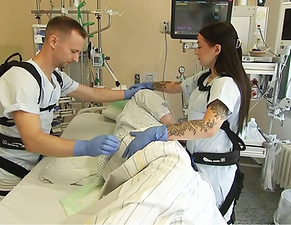
The BionicBack is a passive exoskeleton designed for caregivers and was specifically developed to reduce physical strain in everyday caregiving. Exoskeletons in the care sector assist with tasks such as lifting, repositioning, and caring for patients, and help to sustainably reduce strain on the back.
Thanks to its bionic structure and elastic elements, the BionicBack can be seamlessly integrated into existing care processes. This makes caregiving more ergonomic, safer, and healthier in the long term.

What are exoskeletons in healthcare?
Exoskeletons in healthcare are wearable assistive devices that support caregivers during physically demanding tasks. They are worn directly on the body and provide targeted relief for the back.
Especially in everyday nursing care, which is characterized by frequent lifting, repositioning, and working in a bent posture, exoskeletons can significantly reduce physical strain. The goal is to protect the health of caregivers and improve working conditions in the long term.
Challenges in nursing care due to back strain and physical exertion.
Work in the caregiving profession is physically demanding and involves high levels of strain. Tasks such as repositioning, lifting, assisting with standing up, or working in a bent-over position place significant strain on the back. These repetitive movements lead to considerable back strain and are among the most common causes of health issues in the caregiving profession.
Recurring tasks such as making beds, providing bedside care, or handing objects while in a low position also place a constant strain on the spine and muscles. These movements are among the most common causes of back pain, muscle tension, and physical fatigue in the nursing profession.
This is exactly where exoskeletons come into play in the care sector: They support caregivers during physically demanding tasks and help to specifically reduce the strain.

Benefits of exoskeletons in healthcare
Reduced strain on the back
Reduction of downtime
Higher employee satisfaction
Positioning as a modern employer
Fast Return on Invest
Scientifically proven relief provided by the BionicBack
Studies and practical applications show that exoskeletons provide measurable relief for the muscles and spine in the healthcare setting. The strain can be significantly reduced, particularly during tasks performed in a bent position or when lifting patients.
The BionicBack was developed specifically for use in everyday healthcare settings and provides noticeable support during repetitive, physically demanding tasks.
37 %
Reduction of spinal curvature.
30 %
Relief for your back.
86 %
Reduction of fatigue symptoms.
Applications of the BionicBack exoskeleton in the nursing and healthcare sector

Inpatient care
Relief in bed supply, transfers and hygiene activities in nursing homes and facilities


Outpatient care
Support with transfers, personal hygiene, lifting and mobilization at home and in residential groups.


Hospitals
Support with patient transfers, material handling, and intralogistics.

Emergency service
Ergonomic support for carrying, transport, and emergency response.


Facilities for people with disabilities
Back relief for people with disabilities participating in support and employment programs.

The right setting for every task
Thanks to its bionic structure and elastic components, the exoskeleton can be seamlessly integrated into existing care routines. Caregivers benefit from reduced back pain, improved ergonomics, and increased productivity in their daily work.

Free-wheel function
The free-wheel function gives caregivers maximum freedom of movement, for example when sitting or walking quickly between patients. Ideal for routine tasks such as documentation and medication preparation.

Dynamic
Dynamic provides targeted support for dynamic movements while bending or squatting. For example, when putting on compression stockings, repositioning a patient, or handing over objects in the lower care area. This support significantly reduces the strain on the back muscles.

Static
Static provides additional stability during forward-leaning positions, such as when changing dressings, performing bedside hygiene, or working for extended periods in a bent-over position. It reduces strain on the back, as well as fatigue and muscle tension.

Mix and Match
Dynamic and Static can be combined in any combination, allowing caregivers to decide for themselves how much assistance is needed depending on the task at hand.
CARE-SKIN
THE PERFECT ACCESSORY FOR YOUR DAILY SKINCARE ROUTINE.
For even greater comfort and hygiene in daily care.
Patient handles ensure safe and comfortable transfers for both caregivers and patients. These handles help avoid the often problematic “neck lift” and allow patients to actively participate in the mobilization process.
The removable and washable cover also ensures easy cleaning and even greater hygiene.


.png)

.png)

Exoskeletons in everyday care - frequently asked questions about the BionicBack
What activities does the BionicBack support?
The BionicBack provides support for various care activities that require the caregiver to work in a bent forward or non-ergonomic position, such as patient transfers, personal hygiene and hygiene as well as therapeutic measures.
How long does it take to put on the BionicBack?
Putting on the BionicBack only takes about a minute and can be adjusted for different body types, taking up hardly any time in the daily routine.
How can the BionicBack be cleaned?
The BionicBack is resistant to water and disinfectants, making it easy to clean and disinfect. All BionicBack pads are removable and can be effectively cleaned on a 60-degree machine wash cycle.
Can the BionicBack be seamlessly integrated into everyday care?
Yes, the BionicBack can be used in combination with qualified care techniques such as kinaesthetics. It is ideal for integration into existing aid concepts and thus contributes to a holistic overall concept.
Is there a cost reimbursement for the BionicBack?
In individual cases, BionicBack can be subsidized. For more information, please contact our team.